To those who see Michael Woodford as a hero for blowing the whistle on a $1.5 billion accounting cover-up at Olympus Corp., the firm’s insistence that he was fired for failing to understand the Japanese business culture is absurd.
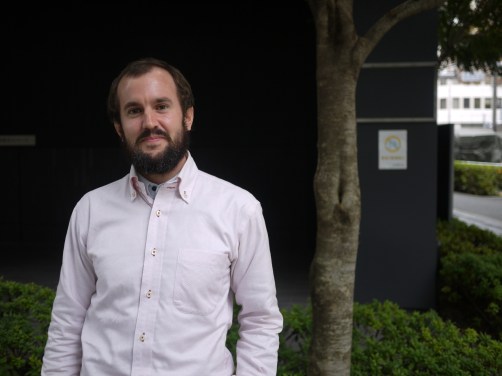
Yet to Chris Berthelsen, a Tokyo-based consultant who has researched the experience of foreign executives in Japan, there may be some weight in Olympus’s claim.
At the core of the cultural tensions between Woodford and his fellow executives was a fundamental difference between Western and Japanese concepts of a “company”, according to Berthelsen, who examined differences in corporate culture as part of a research project at the Hitotsubashi University Graduate School of Commerce and Management.
“Perhaps the purpose of the company [in Japan] is… to keep everyone employed, and to get people through their lives with a modicum of stability,” he says, contrasting it to the Western idea of a company as a non-human legal entity whose only objective is to make a profit.
Berthelsen suggests that the desire to maintain the company without losing face is at the root of most corporate scandals in Japan, while corruption in the West is more often spurred by personal greed. To the Olympus executives, Woodford’s decision to fan the flames of a media furor while the firm’s stock prices plummeted might have seemed like the act of a traitor rather than that of someone who had the company’s best interests at heart.
“By bringing it out into the open, is that going to be a good thing for the company, or the people that work there?” Berthelsen asks.
Woodford announced on Jan. 6 that he would be giving up his proxy fight to return as CEO of the company, and suing Olympus for unfair dismissal. Kanji Ishizumi, a Japanese lawyer who has represented American investors in takeover bids of Japanese companies, thinks that Woodford’s actions as CEO were just—but anticipated this outcome, saying his media campaign after being fired was a strategic failure.
“The only way that Woodford would get support from institutional investors would be to meet with the presidents of those institutions privately, but he would never have able to do that because he had become so high profile in the media. Even meeting with Woodford would damage the reputation or image of that institution,” Ishizumi says.
Woodford, however, argues that media coverage was necessary for the authorities to pay attention to the case.

“I don’t think I had any choice,” he said at a news conference on Nov. 25 at the Foreign Correspondents’ Club of Japan in Tokyo. “Put your hand up if you think the issue would have been dealt with adequately and in the same thorough way if I’d gone to the Japanese authorities. Two, three, five?” Few put their hands up.
The 51 year old Briton’s assertion that the authorities were slow off the mark, however, belies his claim that the problems at Olympus were personal (he said “the problem was with Mr. Kikukawa, the president of the company when we paid $700 million in fees,” at the same conference), rather than cultural.
Commentators have been similarly polarized: some see the scandal as an isolated incident, while others see it as evidence of endemic flaws in Japanese business culture. Prime Minister Yoshihiko Noda expressed his concerns over the latter, saying he hoped people wouldn’t take “the events at this one Japanese company and generalize from that to say Japan is a country that [does not follow] the rules of capitalism.”
Yet fears persists that Olympus’s problems are part of a deeper rooted issue in Japan’s corporate structure.
“These things do happen in the top echelons of major Japanese companies,” says Mitsuya Goto, the former head of Nissan’s international relations. “I think [Woodford] did a very good thing… when the company is completely reorganized at the top he might be a good man to manage the newly structured company.”
The current board members, including president Shuichi Takayama, seem less than keen to let that happen. There have also been suggestions that Woodford has left other Japanese companies disinclined to invite foreigners into their inner circle.
According to Berthelsen, one of the problems is the inherent distrust of foreign executives.
“Your average executive is brought in for two to four years, and they usually have a specific set of metrics to achieve,” he says. “If they boss the Japanese staff about, they’ll either resent it or refuse to obey because they know the exec will be gone in a few years.”
As a result, foreign executives are often viewed as transient, brash and dictatorial. Woodford could fit this description: a former Olympus executive, Koji Miyata, called him “relentless” and “the exact opposite of a consensus-seeking Japanese,” while he was only expecting to stay at the helm for four years—a relatively short time for a business culture still hanging onto the vestiges of a lifetime employment model.
However, these factors also allowed Woodford to blow the whistle where other managers, eager to maintain the status quo, could not. This might be because managers in Japan reach their position in a different way than those in the West, according to a 45-year-old female human resources executive Berthelsen interviewed, who asked not to be named.
“[In Japan], your actual performance is not the real indicator for your promotion; the real indicator is just being there and your relationships, your rapport with the senior management,” she said.
As foreign executives like Woodford usually rise to the top due to impressive performance, they are often brought in as agents of change whose role is to create discord. The same executive commented that they need to act carefully for the Japanese side to remain cooperative:
“The ability to create positive dissonance but still maintain harmony is important… being warm and human and at the same time creating understanding of the need for change.”
Woodford’s relatively short time at the Japanese headquarters left him at a disadvantage, however, when he began to push for change. He says he was stonewalled by executives when he began to ask questions about the unusual acquisitions and advisory fees paid by Olympus that he read about in FACTA, a Japanese magazine—leaving him with no choice but to copy the company’s auditors into letters he was sending the board members about the payments.
The decision to do so might have been a natural one for Woodford, but is less so in a Japanese business context, where issues remain internal while a consensus is being reached. He may have underestimated the power of “nemawashi,” or consensus-building through private, one-on-one meetings.
“Nemawashi is a pejorative term in Japan, actually, but it’s required. The purpose of meetings is intrinsically different for Japanese. We go to meetings to brainstorm, discuss, and hammer things out and decide things,” said Berthelsen’s interviewee. “They go to meetings to confirm what has already been agreed to, and I think a lot of foreigners never figure that out. So as a manager it’s absolutely critical that you get that you don’t go to meetings to decide or discuss; you’ve got to do all that outside.”
Woodford seemed unaware of this, as he expressed shock that the decision to oust him seemed “pre-decided” when the board voted on it in a meeting. He was also mistaken in thinking that going solo might win him results:
“I copied in Ernst and Young because I thought it would be harder for the board to ignore it, and I got fired as a result,” he said at the Nov. 25 news conference. The executive points out why Woodford’s actions might have led to his own denouement:
“People won’t push back much. They won’t challenge a lot so you have to be careful that you don’t railroad people and force people along a path that they haven’t bought into. Go more slowly than you would otherwise or you’ll miss the signs that they aren’t on board and get the passive aggression at the end.”
Some are critical of such passivity. Tadashi Yanai, the founder and president of Fast Retailing Co., which operates the Japanese giant Uniqlo, would agree.
“Japan’s biggest problems are conservatism and cowardice. We want stability, peace of mind and safety. But the world keeps changing. Other countries are growing while we in Japan stick to our old ways,” he wrote in a report in the business journal of global management consultant McKinsey & Co.
Many of the interviewees Berthelsen interviewed also expressed their frustration with the prioritization of harmony over change and an environment in which few are willing to rock the boat.
“If you want to offer something which is a bit creative and involves some level of risk then you might find that very frustrating,” said a 35-year-old male executive in research, adding, “Everyone has a vested interest in the stability of the system rather than, perhaps, genuine progress.”
But Berthelsen points out that the Japanese system still has many positive aspects that justify its continued existence, including companies’ increased sense of responsibility for their employees and greater job security. Despite Japan’s so-called “lost” decades, unemployment still hovers around just 5%.
Yet low employee turnover and emphasis on harmony in the workplace can lead to complacency and a lack of innovation or competitiveness—not to mention deceit and fraud, as in the Olympus case. For that reason, foreign managers can often instigate the changes that native ones cannot.
“There are advantages to not being Japanese, though. You can start jumping up and down and yelling, ‘Come on!’ but you could not do that if you were Japanese,” noted another of Berthelsen’s interviewees, a 40-year-old female executive in research.
However, Woodford is skeptical that foreign executives will want to come to grips with Japanese business culture after witnessing his dismissal. At the Nov. 25 news conference inTokyo, he asked, “After my experience, do you think they’ll be queuing up?”


 Sophie Knight
Leave a comment